By Dr. Karson Mui, DC, DACBSP
Mui Chiropractic & Sports Medicine | Newton, Massachusetts
Shockwave Therapy Newton MA: A Personal Recovery Story
Patients searching for Shockwave Therapy Newton MA are often dealing with an injury that has not improved with rest, stretching, or traditional treatment. They may have chronic tendon pain, reduced mobility, or difficulty returning to exercise.
I understand that frustration because I experienced it myself.
As a sports chiropractor, I was initially skeptical about shockwave therapy. I had seen it promoted as a treatment for chronic tendon injuries, but I wanted more than marketing claims. I wanted to understand how it worked, whether it could improve long-term function, and how it should fit into an evidence-based rehabilitation plan.
Then I developed supraspinatus tendinopathy in my own shoulder.
After trying several traditional approaches without complete relief, I decided to undergo shockwave therapy myself. The results changed my opinion of the treatment and eventually led me to introduce it at Mui Chiropractic & Sports Medicine.
Why I Was Skeptical About Shockwave Therapy
Healthcare providers should be skeptical of treatments that make dramatic promises.
Throughout my career, I have focused on evidence-based sports chiropractic care. I regularly use chiropractic adjustments, soft-tissue therapy, Graston Technique, dry needling, mobility work, progressive strengthening, and rehabilitation exercises.
Therefore, I did not want to add a new treatment simply because it was popular.
Before recommending any therapy to patients, I want to know:
- Does it have a reasonable clinical purpose?
- Is it supported by research?
- Does it improve function rather than temporarily masking pain?
- Can it be combined with active rehabilitation?
- Is it appropriate for the patient’s specific diagnosis?
At first, I was unsure whether extracorporeal shockwave therapy met those standards.
Ironically, my own shoulder became the case that changed my mind.
How My Shoulder Pain Developed
Years of treating patients, working on the sidelines of professional sporting events, lifting equipment, and carrying heavy photography gear gradually placed stress on my shoulder.
The pain did not begin with one dramatic injury. Instead, it developed slowly.
At first, I noticed discomfort when reaching overhead. Eventually, the pain began affecting sleep, weight training, and routine daily activities.
My symptoms included:
- Pain when reaching above shoulder height
- Difficulty sleeping on the affected side
- Weakness during pressing and lifting movements
- Pain while demonstrating exercises
- Discomfort while carrying camera equipment
- Persistent aching around the shoulder
The pattern was consistent with rotator cuff dysfunction, particularly the supraspinatus tendon.
What Is Supraspinatus Tendinopathy?
The supraspinatus is one of the four muscles that form the rotator cuff. Its tendon passes through a relatively small space near the top of the shoulder before attaching to the upper arm.
The supraspinatus helps initiate arm elevation and contributes to shoulder stability.
When the tendon becomes repeatedly overloaded, irritated, or unable to recover properly, supraspinatus tendinopathy can develop.
Common symptoms may include:
- Pain when lifting the arm
- Pain during overhead activity
- Shoulder weakness
- Difficulty sleeping on the affected side
- Pain during exercise
- Reduced tolerance for repetitive activity
This condition may affect athletes, manual workers, healthcare providers, photographers, and anyone who regularly uses the shoulder.
Traditional Shoulder Treatment Helped, but My Progress Stalled
Because I treat musculoskeletal injuries every day, I understood the basic rehabilitation process.
I modified my activity.
I performed strengthening exercises.
I worked on shoulder mobility.
I received hands-on treatment.
I reduced movements that repeatedly aggravated the tendon.
These steps helped, but my progress eventually plateaued. The shoulder improved enough to function, but it never felt fully resolved.
That is a common challenge with chronic tendon injuries. Symptoms may improve temporarily, yet the tissue remains sensitive when activity increases.
At that point, I decided to try Shockwave Therapy Newton MA for myself.
My First Experience With Shockwave Therapy
I did not expect one treatment to fix everything.
After the first session, my shoulder felt sore, similar to the soreness caused by a demanding workout or deep soft-tissue treatment.
However, the response over the following weeks was different from what I had experienced with other therapies.
Gradually, the constant ache decreased.
Overhead movement became more comfortable.
My shoulder tolerated exercise better.
Sleeping on that side became easier.
Most importantly, I stopped thinking about the injury throughout the day.
The improvement was not instantaneous. Instead, it developed progressively as I continued treatment and rehabilitation.
That experience changed my view of shockwave therapy.
What Is Shockwave Therapy?
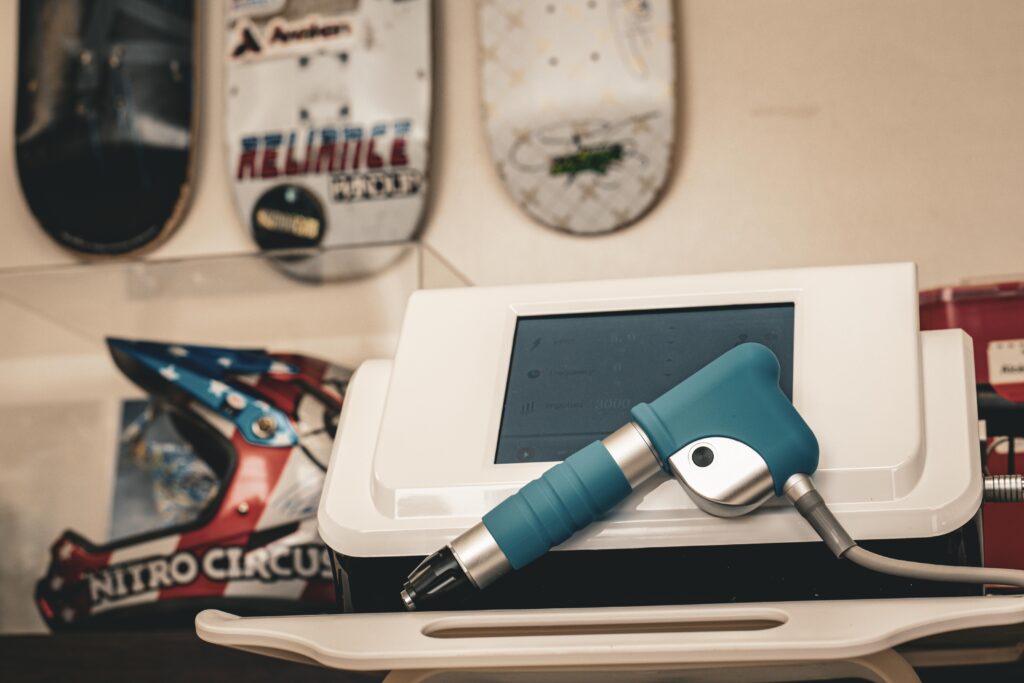
Shockwave therapy is also known as extracorporeal shockwave therapy, or ESWT.
Despite the name, it does not deliver an electrical shock.
The device produces controlled acoustic pressure waves that travel into targeted tissue. These mechanical pulses may stimulate a biological response within tendons, muscles, fascia, and other structures.
Depending on the condition, shockwave treatment may be used to support healing, reduce pain, and improve tissue tolerance.
The therapy is commonly used for chronic tendon and soft-tissue conditions that have not fully responded to rest or conventional care.
How Shockwave Therapy May Support Healing
Shockwave therapy does not simply numb pain.
The goal is to stimulate a response within tissue that has become chronically irritated or slow to heal.
Potential effects may include:
- Increased local circulation
- Stimulation of cellular activity
- Support for collagen remodeling
- Improved tissue metabolism
- Reduced sensitivity in painful tissue
- Better tolerance for progressive loading
- Promotion of the body’s natural healing response
The exact response varies depending on the condition, duration of symptoms, treatment intensity, and rehabilitation plan.
For this reason, Shockwave Therapy Newton MA should not be viewed as a one-size-fits-all treatment.
Why Tendon Injuries Can Become Chronic
Tendons connect muscles to bones and are designed to transfer force.
They adapt to activity when loading and recovery are appropriately balanced. However, problems may develop when training demands increase faster than the tissue can adapt.
A tendon may become painful when it experiences:
- Repetitive overuse
- Sudden changes in activity
- Inadequate recovery
- Poor strength or movement control
- Previous injury
- Excessive training volume
- Repeated compression
- Long periods of inactivity followed by intense exercise
Unlike many muscle injuries, chronic tendon pain may persist for months.
Rest alone may decrease symptoms temporarily, but complete inactivity can also reduce the tendon’s ability to tolerate future load.
Successful treatment usually requires a gradual return to strengthening and activity.
Shockwave Therapy Is Not a Magic Treatment
My shoulder improved significantly, but shockwave therapy was not the only reason.
I also continued to manage activity, perform rehabilitation exercises, restore mobility, and progressively strengthen the shoulder.
At Mui Chiropractic & Sports Medicine, we do not use ESWT as a standalone solution for every patient.
Instead, it may be combined with:
- Progressive tendon loading
- Chiropractic adjustments
- Graston Technique
- Instrument-assisted soft-tissue mobilization
- Dry needling
- Myofascial release
- Mobility exercises
- Strength training
- Kinesiology taping
- Movement retraining
- Home rehabilitation exercises
The most effective plan depends on the patient’s diagnosis, goals, activity level, and overall health.
Conditions Commonly Treated With Shockwave Therapy
Patients often associate shockwave treatment with plantar fasciitis or Achilles tendon pain. However, the therapy may be used for several musculoskeletal conditions.
At our Newton sports medicine office, we may consider shockwave therapy for:
- Achilles tendinopathy
- Plantar fasciitis
- Supraspinatus tendinopathy
- Rotator cuff tendinopathy
- Tennis elbow
- Golfer’s elbow
- Patellar tendinopathy
- Hamstring tendinopathy
- Gluteal tendinopathy
- Calcific shoulder tendinitis
- Chronic muscle pain
- Certain scar-tissue restrictions
Not every painful condition is appropriate for ESWT. A proper examination should take place before treatment begins.
Shockwave Therapy for Shoulder Pain
Shoulder pain can have many causes.
Symptoms may come from the rotator cuff, biceps tendon, joint, neck, labrum, or surrounding muscles. Therefore, shoulder pain should not automatically be treated with shockwave therapy.
A clinical evaluation may include:
- Shoulder range of motion
- Strength testing
- Orthopedic testing
- Cervical spine evaluation
- Posture and movement assessment
- Review of training or work demands
- Evaluation of aggravating activities
- Referral for imaging when appropriate
In my case, the symptoms were consistent with supraspinatus tendinopathy, making the tendon an appropriate treatment target.
For patients considering Shockwave Therapy Newton MA, identifying the correct tissue is essential.
What Does Shockwave Therapy Feel Like?
Most patients describe shockwave treatment as rapid tapping or deep pressure over the injured tissue.
The sensation can vary significantly.
Healthy tissue may feel relatively comfortable, while a chronically irritated tendon may feel more sensitive.
Patients commonly describe:
- Deep pressure
- Rapid mechanical tapping
- Mild to moderate discomfort
- Local tenderness
- A sensation similar to intense soft-tissue treatment
The intensity can usually be adjusted based on patient tolerance.
Some discomfort during treatment does not automatically mean the therapy is causing damage. However, treatment should remain controlled and appropriate for the condition.
How Long Does a Shockwave Session Take?
Treatment time depends on the area being treated and the clinical plan.
The shockwave portion of the appointment often lasts approximately five to ten minutes.
The full visit may also include examination, hands-on treatment, mobility work, or rehabilitation exercises.
Many patients receive a short series of treatments rather than one isolated session.
How Many Treatments Are Usually Needed?
The number of sessions varies.
Many treatment plans include approximately four to six visits, although some patients may need fewer or additional sessions.
Factors that may affect the treatment plan include:
- How long the condition has been present
- The tendon or body area involved
- Activity level
- Severity of symptoms
- Previous treatment
- General health
- Compliance with rehabilitation
- Ability to modify aggravating activities
The goal is not to continue treatment indefinitely. Progress should be reassessed regularly.
Can You Exercise During Shockwave Therapy?
In many cases, yes.
Patients are often encouraged to continue an appropriate rehabilitation program while receiving treatment.
However, exercise intensity may need to be adjusted.
For example, a patient with shoulder tendinopathy may temporarily reduce heavy overhead pressing while continuing pain-free strengthening and controlled loading.
Complete rest is not always the best solution for tendon pain. Instead, the tendon often needs the correct amount of activity.
The key is finding a level that stimulates adaptation without repeatedly aggravating symptoms.
From Personal Experience to Clinical Use
My own shoulder recovery gave me a better understanding of what patients experience during shockwave treatment.
It also made me more comfortable explaining that the therapy is not always painless, immediate, or appropriate for every condition.
However, when used for the right diagnosis, it can be a valuable part of care.
Today, Shockwave Therapy Newton MA is one of the treatment options available at Mui Chiropractic & Sports Medicine for patients with persistent tendon and soft-tissue injuries.
We use it as part of an individualized plan rather than as a replacement for examination or rehabilitation.
Shockwave Therapy for Athletes
Our office regularly works with active adults, high school athletes, collegiate athletes, professional athletes, and Olympic-level competitors.
Tendon injuries can be especially challenging for athletes because complete rest may not be realistic during training or competition.
Treatment often requires balancing several goals:
- Reducing pain
- Maintaining conditioning
- Protecting the injured tissue
- Restoring strength
- Managing training volume
- Preparing for competition
- Reducing reinjury risk
Shockwave therapy may help support this process when combined with careful load management and rehabilitation.
Shockwave Therapy for Everyday Patients
You do not need to be a professional athlete to benefit from sports medicine principles.
The same approach used with elite athletes may help runners, golfers, weightlifters, parents, healthcare providers, and active adults.
Many patients simply want to:
- Walk without heel pain
- Sleep without shoulder pain
- Return to the gym
- Play golf comfortably
- Run again
- Lift their children
- Complete daily tasks without discomfort
The goal of treatment is not only pain relief. It is improved function and confidence.
Why Dr. Mui Now Recommends Shockwave Therapy
Being skeptical was important.
It pushed me to evaluate the treatment carefully rather than accepting exaggerated claims.
My opinion changed because of firsthand experience, clinical observation, and the way shockwave therapy fit into a comprehensive rehabilitation plan.
I do not recommend it because it is trendy.
I recommend it when the diagnosis is appropriate, the patient understands the process, and the treatment supports a larger recovery plan.
My shoulder did not improve because of a miracle.
It improved because we identified the injured tendon, applied a targeted therapy, modified activity, and continued progressive strengthening.
That is the same approach we use with our patients.
Looking for Shockwave Therapy Newton MA?
If you have persistent tendon pain that has not improved with rest, stretching, or previous treatment, a comprehensive evaluation may help identify the source of the problem.
At Mui Chiropractic & Sports Medicine, we evaluate how your injury affects movement, strength, work, exercise, and daily life.
When appropriate, shockwave therapy may be included alongside hands-on care and rehabilitation.
Our goal is to help patients move better, regain strength, and return to the activities they enjoy.
Schedule an evaluation to determine whether Shockwave Therapy Newton MA is appropriate for your condition.
Frequently Asked Questions About Shockwave Therapy
Does shockwave therapy really work?
Shockwave therapy may help certain chronic tendon and soft-tissue conditions. Results vary based on diagnosis, severity, treatment plan, and rehabilitation.
Is shockwave therapy painful?
Some patients experience mild to moderate discomfort during treatment. Sensitive or injured tissue may feel more intense than healthy tissue.
How quickly will I feel improvement?
Some patients notice early changes, while others improve gradually over several weeks. Tendon remodeling and functional recovery take time.
Is shockwave therapy an electrical treatment?
No. Shockwave therapy uses acoustic pressure waves rather than electrical shocks.
How many shockwave sessions will I need?
Many patients receive approximately four to six sessions. However, the exact number depends on the condition and response to treatment.
Can shockwave therapy treat supraspinatus tendinopathy?
It may be appropriate for certain cases of chronic supraspinatus or rotator cuff tendinopathy after a proper examination.
Can I exercise after treatment?
Many patients continue modified exercise and rehabilitation. Your provider should guide activity based on your diagnosis and symptoms.
Is Shockwave Therapy Newton MA appropriate for every injury?
No. Shockwave therapy is not suitable for every patient or every condition. A clinical examination is necessary before treatment begins.