Achilles Tendinopathy Treatment in Newton, MA: From Injury to the IRONMAN World Championship
July 16, 2026
From Oceanside to Kona: How Evidence-Based Achilles Tendinopathy Treatment Helped a Professional IRONMAN Athlete Return to the World Championship
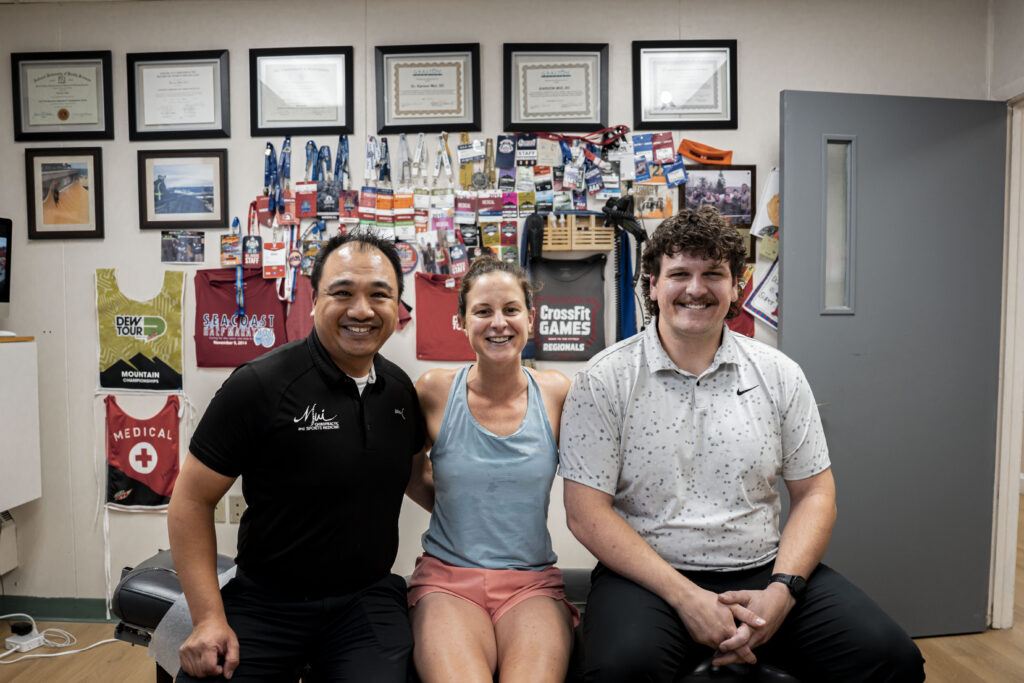
By Karson Mui, DC, DACBSP Mui Chiropractic & Sports Medicine | Newton, Massachusetts
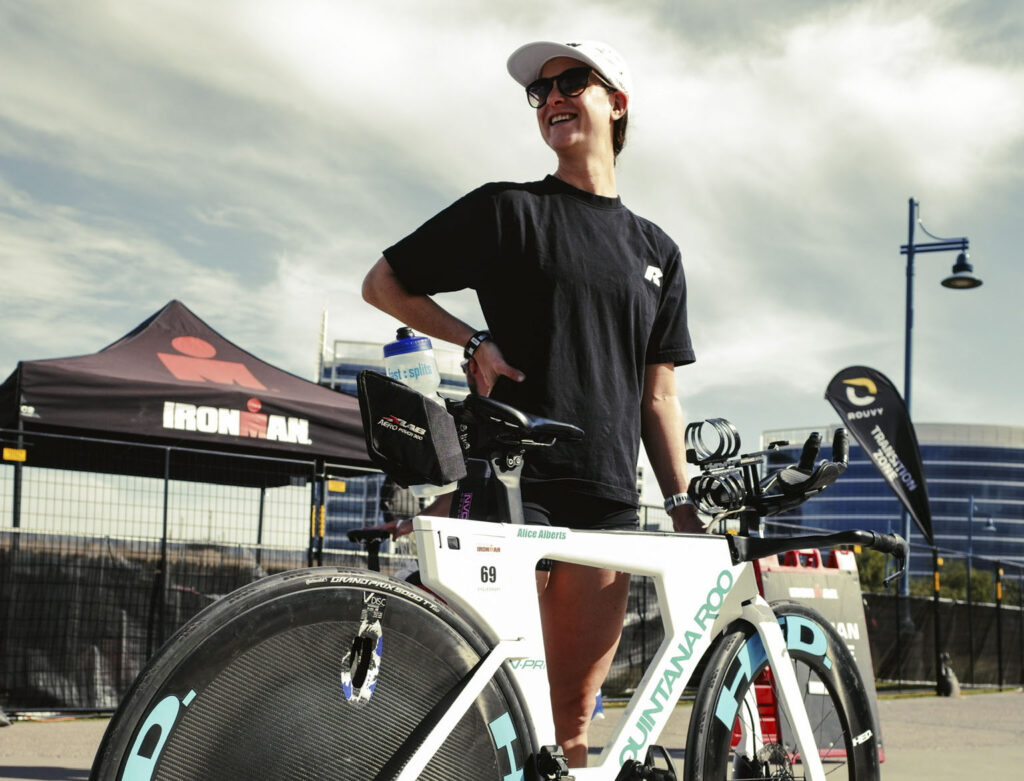
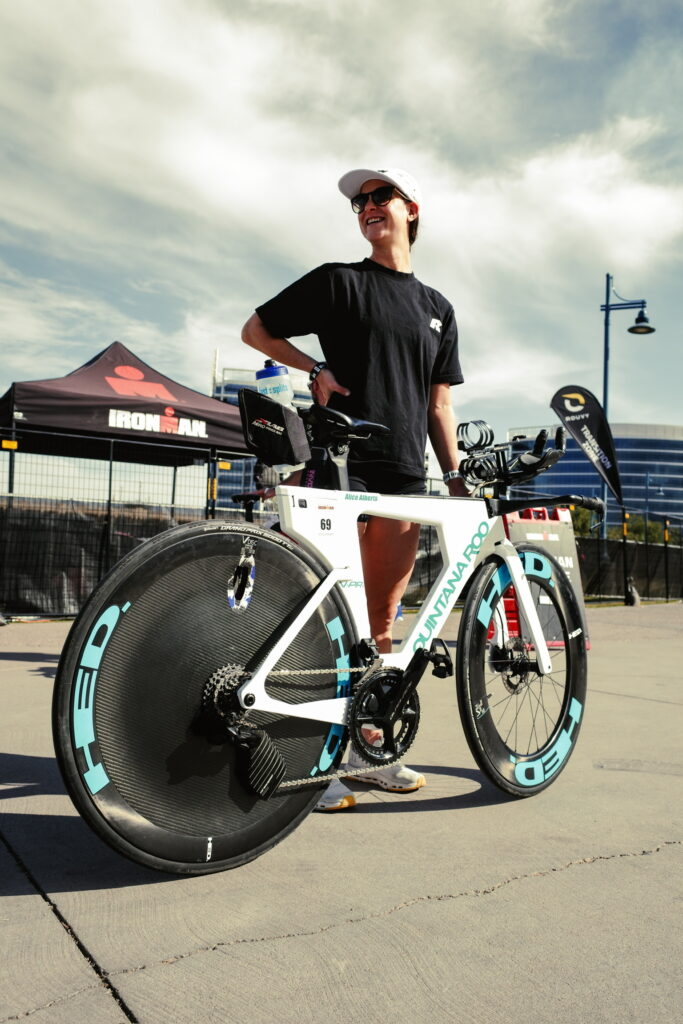
Photo by: Kenny Withrow
From Oceanside to Kona: A Professional Athlete’s Recovery
Achilles tendinopathy treatment in Newton, MA, helped professional IRONMAN triathlete Alice Alberts continue competing while recovering from a challenging Achilles tendon injury. Her journey began only days after IRONMAN 70.3 Oceanside in April 2025 and ultimately took her to the starting line of the 2025 IRONMAN World Championship in Kona.
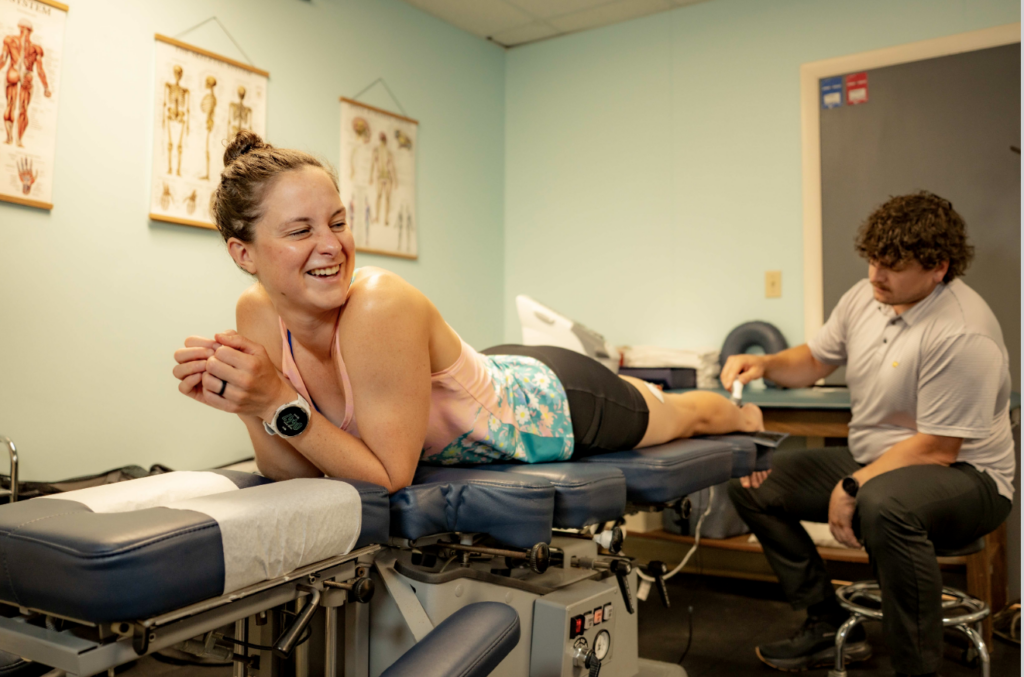
Alice arrived at Mui Chiropractic & Sports Medicine after finishing 12th overall against one of the strongest professional women’s fields in triathlon. Although the result looked promising, she was managing an increasingly painful Achilles tendon that threatened the remainder of her season.
The timing could not have been worse. In only three weeks, Alice was scheduled to compete at the IRONMAN Texas North American Championship. There was not enough time to completely rehabilitate a tendon that had been overloaded through months of high-level training.
Instead of asking how we could completely heal the injury before Texas, we focused on a more practical question: How could we help an elite athlete continue pursuing her goals while protecting a tendon approaching its limit?
That question guided every treatment decision over the following months. Eventually, Alice’s recovery developed into a journey our team called Destination Kona.
Although Alice competes at the highest level of endurance sport, the same principles guide our approach to Achilles tendinopathy treatment in Newton, MA. Whether you are training for an IRONMAN, preparing for your first 5K, or trying to walk comfortably again, successful Achilles rehabilitation requires an accurate diagnosis, progressive tendon loading, individualized care, and a clear return-to-activity plan.
Understanding Achilles Tendinopathy
Many people are told they have Achilles tendonitis, but that diagnosis is often outdated.
Most long-lasting Achilles pain is actually Achilles tendinopathy, a condition caused by the tendon gradually losing its ability to tolerate repeated loading. Rather than ongoing inflammation, the collagen fibers within the tendon become disorganized after months of repetitive stress. The tendon becomes thicker, weaker, and less capable of handling the demands placed upon it.
The Achilles tendon is the strongest tendon in the human body. Even so, it experiences tremendous forces during walking, running, jumping, and climbing stairs. During running alone, the tendon may absorb forces equal to six to eight times a person’s body weight with every stride.
For endurance athletes, those numbers become staggering.
An IRONMAN athlete may take tens of thousands of running strides during a single long training session. Over the course of a season, that translates into hundreds of thousands of loading cycles through the same tendon.
It’s no surprise that Achilles tendinopathy is one of the most common overuse injuries among:
Distance runners
Triathletes
Cyclists who transition to running
Soccer players
Tennis and pickleball athletes
Basketball players
Weekend warriors returning to activity
Although the injury is common, effective treatment requires more than simply reducing pain.
Why Achilles Tendinopathy Is Difficult to Treat
One of the biggest misconceptions surrounding Achilles pain is that rest alone will solve the problem.
Rest often reduces symptoms because it temporarily removes stress from the tendon. Unfortunately, the improvement is frequently short-lived. Once running or sport resumes, the pain often returns because the tendon has not regained its ability to tolerate load.
This is one of the reasons Achilles tendinopathy can become so frustrating.
Unlike muscles, tendons remodel slowly. While muscle soreness may improve within days, tendon recovery often takes weeks or even months. Successful rehabilitation requires patience, consistent strengthening, and careful progression rather than complete avoidance of activity.
Modern sports medicine has shifted away from prolonged rest and toward progressive tendon loading.
Research consistently shows that tendons become stronger when they are exposed to the right amount of stress at the right time. Too much loading can worsen symptoms, while too little loading prevents the tendon from adapting.
Finding that balance is one of the most important aspects of rehabilitation.
At Mui Chiropractic & Sports Medicine, every treatment plan is individualized. We consider training volume, biomechanics, previous injuries, footwear, strength deficits, recovery capacity, and competition goals before deciding how quickly an athlete should progress.
No two Achilles injuries are exactly alike.
The First Goal: IRONMAN Texas
When Alice first arrived at our office, we weren’t thinking about the IRONMAN World Championship.
We were thinking about Texas.
With only three weeks before one of the biggest races of the year, every decision mattered.
Completely healing the tendon simply wasn’t realistic within that timeframe.
Instead, our objective became much more practical.
We wanted to reduce unnecessary stress on the Achilles while restoring efficient movement throughout the entire lower extremity. At the same time, we needed to preserve enough training so Alice could remain competitive on race day.
Like many elite athletes, she couldn’t simply stop training.
Every treatment session was designed around a single question:
“What does Alice need today to continue moving toward Texas?”
That mindset shaped every clinical decision we made.
Building a Treatment Plan for an Elite IRONMAN Athlete
Rather than relying on one treatment, we combined multiple evidence-based approaches into a comprehensive rehabilitation plan.
During the first phase of care, treatment included:
Sports chiropractic adjustments to improve motion throughout the foot, ankle, knee, hip, pelvis, and lumbar spine.
Graston® Instrument Assisted Soft Tissue Mobilization to address restrictions within the calf complex.
Myofascial release to reduce muscular tension and improve tissue mobility.
Progressive rehabilitation exercises that continued loading the tendon without overwhelming it.
Careful communication regarding training volume, recovery, and race preparation.
Each visit built upon the previous one.
Instead of chasing pain, we focused on improving movement quality, restoring strength, and allowing the tendon to tolerate progressively greater demands.
Only three weeks later, Alice stood on the starting line at IRONMAN Texas.
She finished 4th overall, delivering one of the strongest performances of her professional career.
It was an incredible result.
However, both Alice and our clinical team understood something important.
The Achilles wasn’t fully healed.
It was simply performing well enough to continue chasing the season’s biggest goals.
The real challenge still lay ahead.
When Everything Changed
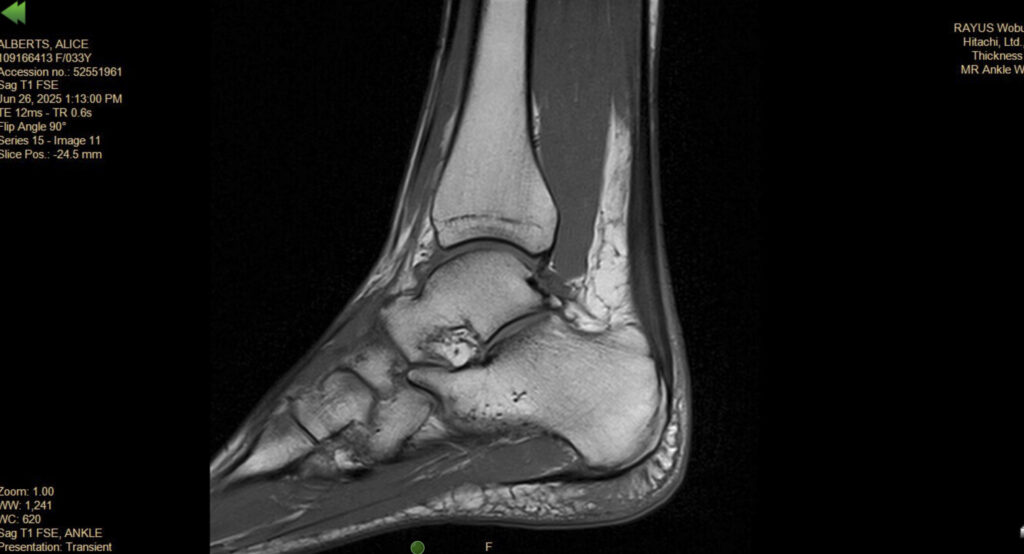
Screenshot of Left achilles MRI
Following another outstanding performance at IRONMAN 70.3 Eagleman, where Alice finished 6th overall, the cumulative demands of months of training and racing finally caught up with her.
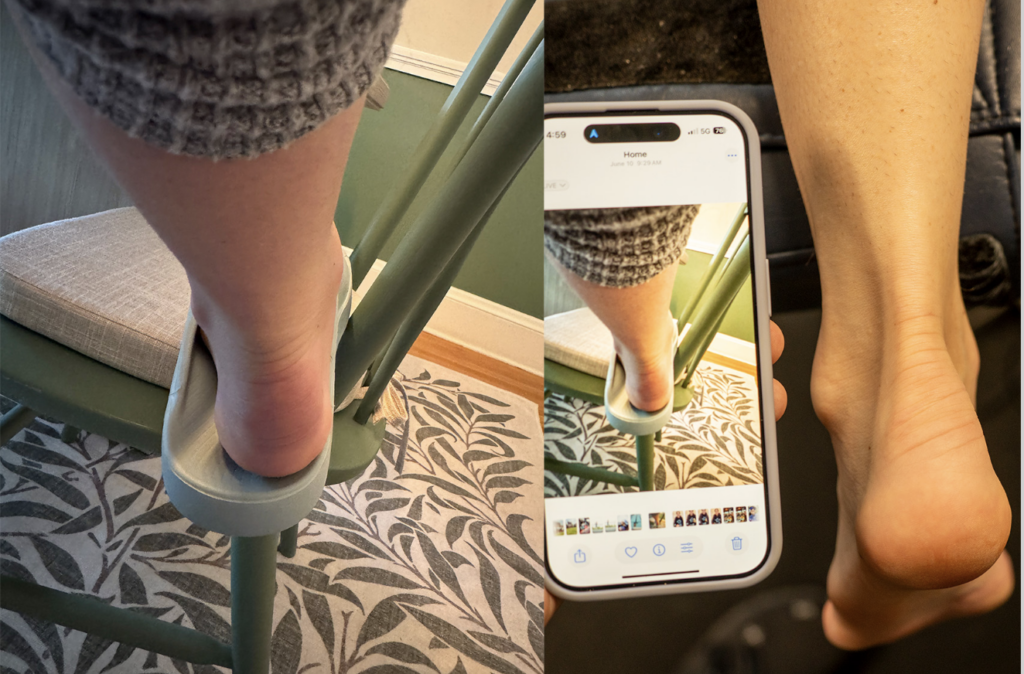
She often joked about having a “sausage Achilles,” referring to the obvious swelling that developed after hard workouts and races. Behind the humor, however, was a tendon that had become increasingly reactive, painful, and swollen.
It was clear that we had reached a turning point.
Until this point, our treatment strategy focused on helping Alice continue racing while carefully managing her symptoms. Now the goal changed.
If she was going to stand on the start line of the IRONMAN World Championship in Kona, we needed to do more than simply control pain.
We needed to rebuild the tendon’s ability to tolerate the extraordinary demands of professional Ironman training.
Looking Beyond the Achilles
One of the most common mistakes in treating Achilles tendinopathy is focusing only on the painful area.
The Achilles tendon doesn’t function in isolation.
Every running stride begins with force generated through the foot and ankle before traveling through the calf, knee, hip, pelvis, and trunk. Restrictions anywhere along this kinetic chain can change how forces are distributed and increase stress on the tendon.
Instead of treating only the Achilles itself, we evaluated how Alice moved as a whole athlete.
Our rehabilitation program focused on restoring efficient movement from the ground up while improving the tendon’s capacity to tolerate progressively greater loads.
Sports Chiropractic Care
Sports chiropractic care remained a cornerstone of Alice’s rehabilitation throughout the season.
Treatment focused on restoring normal joint motion throughout the:
Foot
Ankle
Knee
Hip
Pelvis
Lumbar spine
Efficient movement allows forces to be shared throughout the lower extremity rather than concentrating excessive stress on one structure.
When joints lose mobility, nearby tissues often compensate. Over time, those compensations can increase strain on muscles, tendons, and ligaments.
While chiropractic adjustments don’t heal a damaged tendon directly, restoring joint mobility can improve overall movement quality and help reduce unnecessary loading through the Achilles during running.
For endurance athletes logging hundreds of miles every month, even small improvements in biomechanics can become meaningful over an entire season.
Using specialized stainless-steel instruments, Graston helps identify and treat areas of soft tissue restriction within muscles and fascia.
For Alice, treatment focused primarily on the:
Gastrocnemius
Soleus
Achilles tendon
Plantar fascia
Posterior lower leg
The objective wasn’t simply to “break up scar tissue,” as is commonly believed.
Instead, Graston was used to improve tissue mobility, reduce soft tissue restrictions, and prepare the muscles for progressive strengthening exercises.
When combined with exercise, many athletes report improved mobility and reduced discomfort during training.
Myofascial Release
Hands-on myofascial release complemented instrument-assisted treatment throughout rehabilitation.
Ironman training places enormous repetitive demands on the calf complex. Tightness within the gastrocnemius, soleus, and surrounding fascia can increase tension throughout the entire posterior chain.
Myofascial release helped reduce excessive muscular tension while improving tissue mobility before strengthening sessions.
Like every treatment we used, it wasn’t intended as a stand-alone solution.
Instead, it prepared Alice’s body to move better during rehabilitation and training.
As Alice’s training volume increased, another challenge became apparent.
Her calf muscles were working overtime to protect an increasingly irritated Achilles tendon.
This often resulted in persistent trigger points and muscular tightness within both the gastrocnemius and soleus.
To address these issues, we incorporated dry needling into her treatment plan.
Dry needling uses thin, sterile needles to target dysfunctional muscle tissue and myofascial trigger points.
Contrary to popular belief, the needles were not placed into the Achilles tendon itself.
Instead, treatment focused on restoring normal muscle function within the calf complex.
Reducing excessive muscle tension allowed Alice to better tolerate strengthening exercises while decreasing unnecessary strain on the Achilles during running.
For many runners, dry needling becomes an effective adjunct to rehabilitation because it helps restore muscle function without replacing the exercise program that ultimately drives recovery.
During periods of particularly heavy training, Alice’s symptoms occasionally became more reactive.
When that happened, we incorporated additional treatment modalities to help calm symptoms between demanding workouts.
These included:
Therapeutic ultrasound
High-voltage electrical stimulation (HVPC)
Neither modality was intended to replace rehabilitation.
Instead, they were used as supportive treatments to reduce discomfort, improve tolerance to training, and help prepare Alice for the next phase of loading.
One of the most exciting developments in sports medicine over the past decade has been the growing evidence supporting Extracorporeal Shockwave Therapy (ESWT)for chronic Achilles tendinopathy.
Shockwave therapy delivers high-energy acoustic waves into injured tissue.
These pressure waves stimulate a biological response within the tendon that may:
Improve collagen remodeling
Encourage new blood vessel formation
Reduce pain
Improve tendon load tolerance
Stimulate the body’s natural healing response
Research has shown that ESWT can be particularly effective for athletes who continue experiencing Achilles pain despite appropriate strengthening programs.
At Mui Chiropractic & Sports Medicine, shockwave therapy is never used as a miracle cure.
Instead, it serves as one component of a comprehensive rehabilitation program that also includes:
Progressive tendon loading
Sports chiropractic care
Manual therapy
Movement correction
Strength development
Activity modification when necessary
For many runners and endurance athletes, this combination provides significantly better outcomes than relying on passive treatments alone.
Progressive Tendon Loading Remained the Foundation
Despite the variety of treatments Alice received, one principle never changed.
Exercise remained the foundation of recovery.
Every treatment session was designed to prepare her for progressive strengthening.
Research consistently identifies tendon loading as the single most important component of successful Achilles tendinopathy rehabilitation.
Tendons become stronger when they experience carefully prescribed stress.
They do not become stronger through complete rest.
As Alice’s symptoms improved, her rehabilitation advanced step by step.
We gradually increased:
Calf strength
Single-leg stability
Tendon loading
Plyometric tolerance
Running volume
Running intensity
Each progression depended on how her tendon responded.
Some weeks moved quickly.
Other weeks required slowing down.
That flexibility allowed Alice to continue training while minimizing setbacks throughout the season.
Preparing for Something Bigger
By late summer, the conversation inside the treatment room had changed.
We were no longer asking whether Alice could finish another race.
We were asking a much bigger question.
Could she be healthy enough to compete against the best triathletes in the world at the IRONMAN World Championship?
The answer would depend on much more than one provider or one treatment.
It would require an entire performance team working toward a single goal.
A goal that eventually became known as Destination Kona.
Destination Kona: Recovery Takes a Team
One of the biggest misconceptions in sports medicine is that successful rehabilitation depends on finding the “right” treatment.
In reality, the best outcomes almost always come from the right team.
Professional athletes rarely rely on a single provider. Instead, they surround themselves with experts who communicate, adapt, and work toward a common goal.
Alice’s recovery was no different.
As her rehabilitation progressed, it became clear that returning to world-class racing would require far more than what happened during appointments in our office.
Every decision needed to fit into the larger picture of her training, racing schedule, recovery, nutrition, and long-term goals.
Communication became just as important as treatment itself.
Building the “Destination Kona” Team
As the season continued, I created a group text that became known as “Destination Kona.”
The purpose was simple.
Everyone involved in Alice’s care needed to stay connected.
Treatment updates, symptom changes, training modifications, race schedules, and recovery strategies were discussed almost daily.
Having direct communication between providers helped us make better decisions in real time.
Rather than working independently, we worked together to answer one question:
“What does Alice need today to keep moving toward Kona?”
That level of collaboration allowed treatment to evolve alongside her training instead of reacting only after problems developed.
Strength and conditioning played a critical role throughout Alice’s rehabilitation.
Our clinic worked closely with Flight Performance & Fitness, who directed her performance training and progressive strength program throughout the season.
While our focus centered on restoring movement quality, managing symptoms, and improving tendon capacity, Flight Performance & Fitness ensured Alice continued building the strength required for professional Ironman racing.
This partnership was essential.
Research consistently shows that tendons adapt best when progressive loading is combined with an individualized strength program.
Without appropriate strength development, even the best manual therapy is unlikely to produce long-term success.
Another important member of Alice’s support team was Fast Splits Multisport.
Their expertise extended beyond simply selling equipment.
Proper bike fitting, training guidance, equipment selection, and athlete support all contributed to reducing unnecessary stress throughout the season.
In endurance sports, seemingly small adjustments can make an enormous difference over hundreds of training hours.
Every improvement in efficiency reduces cumulative stress on the body.
That allowed Alice to continue training while protecting an Achilles tendon that still required careful management.
Communication Was Part of the Treatment
One lesson that became increasingly clear throughout Alice’s recovery was that rehabilitation doesn’t end when the appointment is over.
The treatment performed in the clinic represents only a small portion of the recovery process.
The remaining hours of the day are often even more important.
Training volume, sleep, nutrition, recovery, footwear, race scheduling, and strength work all influence how the tendon responds.
Because of that, communication became an ongoing part of treatment rather than something that happened only during office visits.
Sometimes that meant modifying training after a particularly difficult workout.
Other times it meant progressing rehabilitation more aggressively because the tendon was responding well.
Every decision was based on how Alice was functioning—not simply how she felt at that moment.
The Athlete’s Perspective
Months after beginning treatment, Alice shared a post on Instagram that perfectly summarized the journey.
“Look how far we’ve come. Bringing back the sausage Achilles (last pic!) for this appreciation post. I would not be running like I am without these two men who got me whole again and then held me together during my build to Kona.
@karson88 made a group text called ‘Destination Kona’ back in June when we all truly weren’t sure if I would be able to get back to running in time.
It’s surreal to be posting these pictures from yesterday during my final tune-up before I catch my flight to Kona tomorrow.
IT’S HAPPENING GUYS.“
Reading those words was incredibly rewarding.
As healthcare providers, we often see patients only during the difficult part of their journey.
Watching someone return to doing what they love—and then perform on one of the biggest stages in endurance sport—is why we do what we do.
Before and after photo of left achilles or “the sausage”
Standing on the Kona Start Line
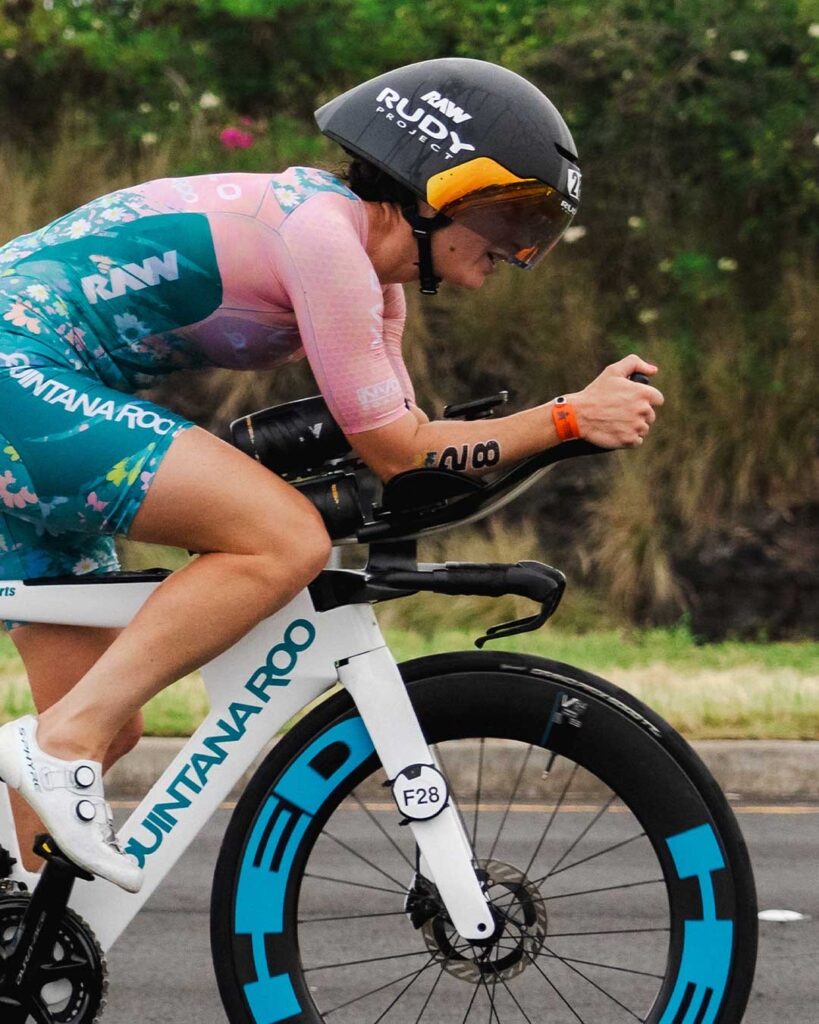
Photo by: Kenny Withrow
A few days later, Alice stood on the starting line of the 2025 IRONMAN World Championship in Kailua-Kona, Hawaii.
Just a few months earlier, even making it to the race had been uncertain.
The goal had never been to eliminate every ache or pain.
Elite athletes rarely compete feeling perfect.
Instead, the goal was to prepare the tendon to tolerate the demands of racing at the highest level in the sport.
Months of rehabilitation had led to this moment.
Racing Against the Best in the World
Competing in Kona is unlike any other race.
The world’s best professional triathletes arrive after qualifying through outstanding performances across the season.
Every athlete on the start line has demonstrated world-class fitness.
Against that field, Alice delivered another remarkable performance.
She finished 23rd overall in the professional women’s race with a time of 9:18:17.
For many people, a finishing position is simply a statistic.
For our team, it represented something much more meaningful.
It represented months of collaboration.
It represented countless treatment sessions.
It represented difficult conversations, modified workouts, progressive rehabilitation, and an athlete who trusted the process even when the finish line seemed uncertain.
What Alice’s Story Means for Every Runner
Most patients who come into our office aren’t preparing for the IRONMAN World Championship.
They’re preparing for something different.
Some want to finish their first 5K.
Others want to complete the Boston Marathon.
Some simply want to walk their dog without pain.
The principles remain exactly the same.
Successful Achilles rehabilitation is rarely about finding one miracle treatment.
Instead, it requires:
An accurate diagnosis.
A comprehensive examination.
Individualized treatment.
Progressive strengthening.
Restoring efficient movement.
Ongoing reassessment.
Patience.
Whether you’re a professional triathlete or a recreational runner, tendons respond to thoughtful, progressive rehabilitation.
Our job is to identify the factors limiting recovery and develop a plan that allows you to return to activity safely and confidently.
Evidence-Based Care, Individualized for Every Patient
One of the reasons Achilles tendinopathy can be frustrating is that no two cases are exactly alike.
Two runners may have nearly identical symptoms but require completely different treatment plans.
Training history, biomechanics, previous injuries, footwear, recovery capacity, and overall strength all influence how a tendon responds.
For that reason, treatment at Mui Chiropractic & Sports Medicine is never based on a one-size-fits-all protocol.
Instead, we continually reassess each patient throughout rehabilitation.
Objective findings—not simply pain levels—guide decisions regarding exercise progression, return to running, speed work, and competition.
Evidence consistently supports combining progressive tendon loading with individualized manual therapy and movement correction rather than relying on passive treatments alone.
That philosophy guided Alice’s recovery.
It also guides every patient we treat.
Returning to Running After Achilles Tendinopathy
One of the most common questions we hear is:
“When can I start running again?”
The answer isn’t based on a calendar.
It depends on how well the tendon tolerates progressively increasing loads.
Returning to running too quickly is one of the leading reasons Achilles tendinopathy becomes a chronic problem. While pain is an important consideration, it is only one part of the decision-making process.
Before increasing mileage, speed work, or hill training, we evaluate several objective measures, including:
Pain during and after activity
Morning stiffness
Single-leg calf strength
Single-leg heel raise endurance
Hop tolerance
Balance and stability
Ankle mobility
Running mechanics
Recovery between training sessions
These measures provide a much clearer picture of tendon health than pain alone.
Once an athlete demonstrates appropriate strength and load tolerance, running volume is gradually increased. Speed work, hills, and race-specific training are added later as the tendon continues to adapt.
Every rehabilitation program progresses at a different pace.
Some athletes return within a few weeks. Others require several months of progressive loading before they are ready for unrestricted training.
The goal isn’t simply to become pain-free.
The goal is to return with a tendon capable of handling the physical demands of your sport.
Achilles Tendon Treatment in Newton, MA
Although Alice’s story took her from Oceanside to the IRONMAN World Championship in Kona, the same evidence-based principles apply to every patient we treat.
At Mui Chiropractic & Sports Medicine in Newton, Massachusetts, we help athletes and active individuals recover from Achilles tendinopathy every day.
Our patients include:
Distance runners
Triathletes
Cyclists
Soccer players
Basketball players
Pickleball players
Tennis players
CrossFit athletes
High school athletes
Weekend warriors
Active adults looking to stay healthy
Every rehabilitation program begins with a comprehensive examination.
Rather than simply treating the painful tendon, we evaluate the entire kinetic chain to identify the factors contributing to overload.
Every recommendation is based on your examination findings, activity level, and personal goals.
Whether you’re training for your first road race or competing at the highest level of professional sport, our objective remains the same:
Reduce pain. Restore movement. Build a stronger tendon. Help you get back to doing what you love.
Frequently Asked Questions
What causes Achilles tendinopathy?
Achilles tendinopathy usually develops from repetitive overload rather than a single injury. Rapid increases in running mileage, hill training, speed work, reduced calf strength, limited ankle mobility, poor recovery, and training errors all increase the risk.
Is Achilles tendinopathy the same as tendonitis?
Not usually.
Persistent Achilles pain is most often tendinopathy, which involves degeneration and reduced load tolerance rather than ongoing inflammation. This distinction is important because rehabilitation focuses on rebuilding tendon capacity instead of simply reducing inflammation.
Should I stop running if my Achilles hurts?
Not necessarily.
Complete rest is rarely the best solution. Many athletes benefit from temporarily modifying training while beginning a progressive rehabilitation program. The appropriate amount of activity depends on your symptoms and examination findings.
Does shockwave therapy work for Achilles tendinopathy?
Research suggests that Extracorporeal Shockwave Therapy (ESWT) can reduce pain and improve function in people with chronic Achilles tendinopathy, particularly when combined with progressive strengthening exercises.
Shockwave therapy is most effective as part of a comprehensive rehabilitation program rather than a stand-alone treatment.
Does dry needling treat the Achilles tendon?
Dry needling is generally used to improve muscle function within the calf rather than treating the tendon directly.
By reducing trigger points and improving muscle performance, dry needling can help decrease excessive stress placed on the Achilles during running.
How long does Achilles tendinopathy take to heal?
Recovery varies considerably.
Mild cases may improve within six to eight weeks, while longstanding tendinopathy often requires three to six months of progressive rehabilitation.
Consistency is one of the biggest predictors of success.
Can chiropractic care help Achilles tendon pain?
Sports chiropractic care can improve joint mobility throughout the foot, ankle, knee, hip, pelvis, and lumbar spine.
Although adjustments do not directly heal the tendon, restoring efficient movement may reduce unnecessary stress on the Achilles and improve overall function.
When should I seek treatment?
If Achilles pain lasts longer than two weeks, worsens with activity, or begins limiting your ability to exercise, it is a good idea to seek an evaluation before the problem becomes more difficult to treat.
Final Thoughts
Alice Alberts’ journey from IRONMAN 70.3 Oceanside to the IRONMAN World Championship was never about finding one miracle treatment.
It was the result of months of collaboration, progressive rehabilitation, evidence-based clinical decision-making, and an athlete who trusted the process through every setback.
Watching Alice stand on the start line in Kona after everything she had overcome was incredibly rewarding. Even more rewarding was seeing her compete confidently against the best athletes in the world.
While most patients who visit our office are not preparing for the IRONMAN World Championship, the principles remain exactly the same.
Successful rehabilitation requires understanding why the injury developed, restoring efficient movement, progressively rebuilding tendon capacity, and continually adapting treatment as strength improves.
That is the approach we use every day at Mui Chiropractic & Sports Medicine.
Whether your goal is to qualify for Kona, complete your first marathon, return to pickleball, or simply enjoy a pain-free walk around your neighborhood, our goal is to help you move better, recover faster, and return to the activities you love with confidence.
Ready to Get Back to Running?
If you’re struggling with Achilles tendon pain, don’t wait until it limits your training or daily activities.
At Mui Chiropractic & Sports Medicine in Newton, Massachusetts, we provide comprehensive, evidence-based care for Achilles tendinopathy and other running injuries.
We work with everyone from recreational runners to professional athletes, creating individualized treatment plans designed to reduce pain, restore movement, and safely return you to sport.
Call our office or schedule your appointment online to begin your recovery today.